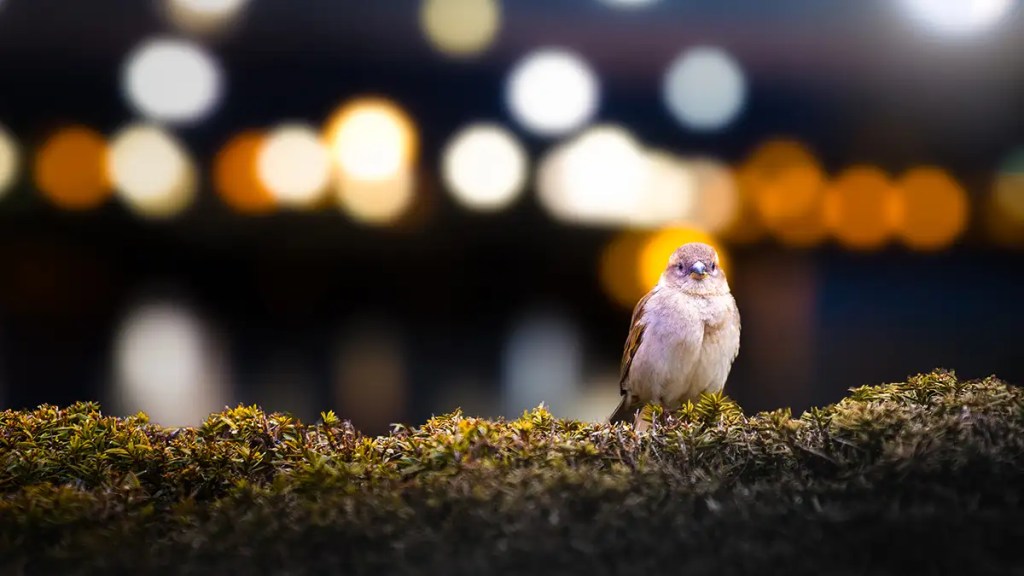
A French photographer exposes the environmental impact of light pollution from industrial greenhouses.
Huge artificially lit industrial greenhouses transform landscapes. Birds sing all night long while the skies over the commercial greenhouses of Brittany in France light up in mysterious colours. Photojournalist Charlene Flores investigates this phenomenon and captures on film the unnatural yellow and pink hues discolouring the night-time skies.
Two local environmentalists, also concerned by the light, discover disorientated animals and decreasing pollination. All of their work combined reveals the environmental impact of light pollution and raises serious questions about the unintended consequences of human attempts to control the natural world.
Exposure to artificial light at night has been shown to affect the immune responses of some birds, and now a study has found that light pollution can extend the infectious period of West Nile virus in house sparrows.
“These birds are a main reservoir of West Nile virus in nature. Mosquitoes will preferentially feed on some of these birds, and they live in urban, light-polluted habitats,” says Meredith Kernbach at the University of South Florida. “They’re likely one of the species that plays a key role in West Nile virus transmission in light-polluted areas.”
“There’s an avian hormone synonymous to cortisol in humans, which is responsible for mediating responses to stressors in birds. We thought that may be dysregulated, but we found that this hormone was not affected by light at night, so we’ve begun investigating melatonin as the possible hormone behind this,” says Kernbach.
It is important to understand the relationship between artificial light and infectious diseases like West Nile virus, because we can make changes to disrupt these effects, she says. “We know there’s a West Nile virus seasons, so we could work with public works departments to turn off lights during the highest risk months,” she says.
This effect could change under different lighting conditions as well, and Kernbach says research into the specific kinds of light that may not affect stress hormones is needed.
Sleepless Birds is a documentary film by Tom Claudon and Dana Melaver.
SOURCE: ALJAZEERA


 GYG PROJECT FOUNDATION
Leave a comment